ServicesRoof Repair
Roof Repair in Blanchard, OK
We find where water is actually getting in, fix that spot with materials that match your roof, and leave your drive and flower beds clean. You get a plain explanation of what failed, photos of the finished repair and a roof that sheds water again.
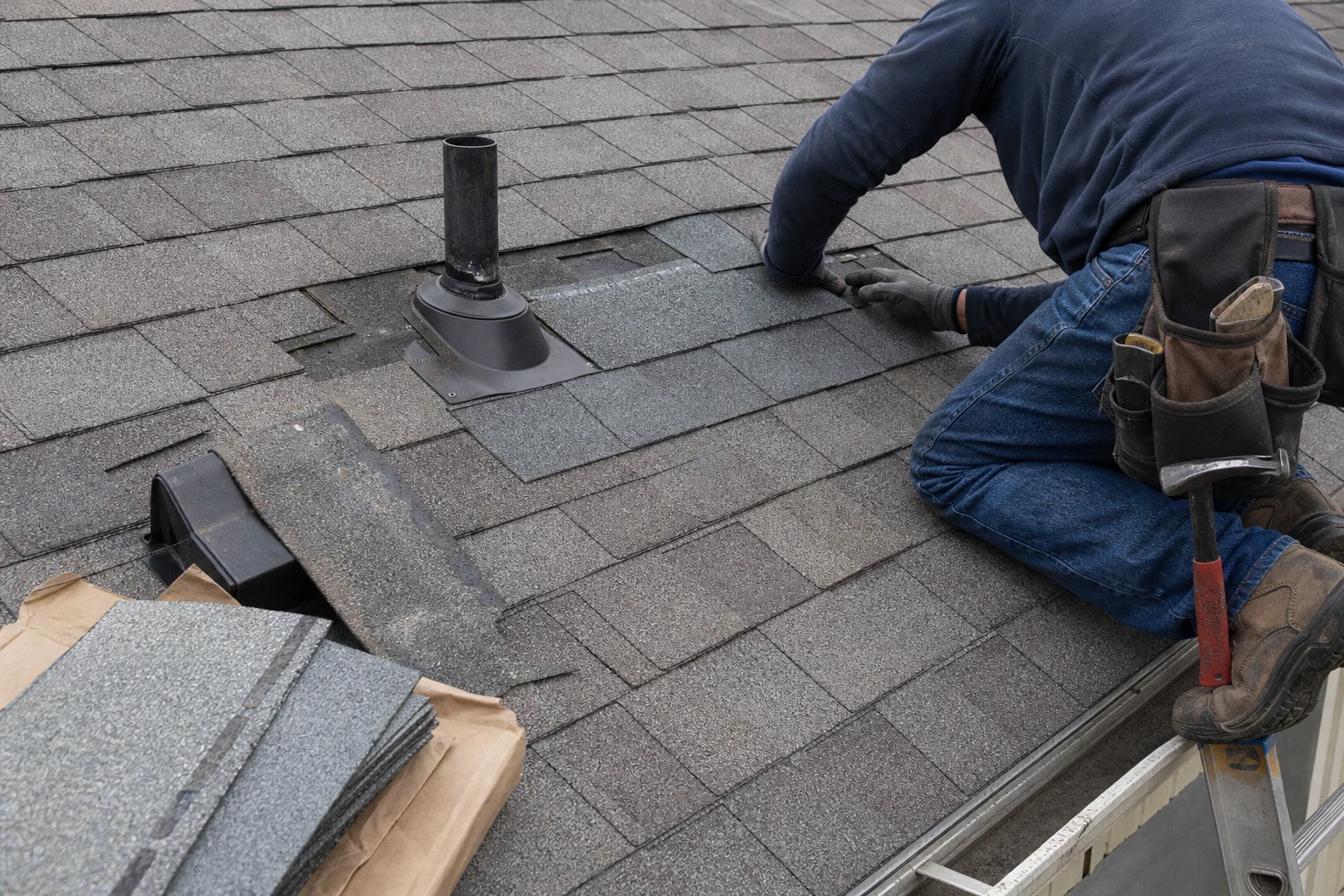
A Repair Is Often the Right Answer
A leaking roof is usually not a finished roof. One split pipe boot, a handful of shingles peeled back by wind, or flashing that has pulled away at a chimney is enough to bring water indoors, even when the shingles everywhere else are sound. Correcting that single failure costs much less than replacing the roof and keeps the disruption to your home small.
Before we recommend anything, we walk every slope. An isolated problem gets repaired. If the shingles are brittle throughout or the sheathing gives underfoot in several spots, we say so and explain why roof replacement may be the better investment. You get a clear answer along with the reasoning.
A repair may be a short job, but it still happens over your landscaping, your windows and your drive. We set up the same way we would for a full reroof: ground covers laid first, scrap gathered throughout the day and a nail magnet run across the property before we leave.
What Our Roof Repair Work Covers
Leak tracing
The drip on your ceiling is rarely directly below the opening. We follow water marks in the attic and along the sheathing back to where it actually enters, so the repair goes in the right place.
Shingle replacement
Missing, split or creased shingles come off and new ones go on, with the neighboring tabs resealed. We bring the closest available color and profile, and you see the sample beside your roof before we fasten anything.
Flashing and penetrations
Most leaks begin where the roof meets something else: a chimney, a skylight, a sidewall or a vent pipe. We reset or renew step and counter flashing and replace rubber pipe boots that the sun has split.
Decking repair
Softened plywood or plank sheathing gets cut back to sound wood and replaced with new decking, fastened properly, before shingles return. Laying new shingles over rot just postpones the next leak.
Ridge and vent work
A loose ridge cap or cracked roof vent lets driven rain in at the peak. We refasten or replace them and confirm the attic still breathes.
Cleanup and protection
Beds and shrubs are covered, old material stays off the lawn, and we run a nail magnet across the yard and drive before leaving.
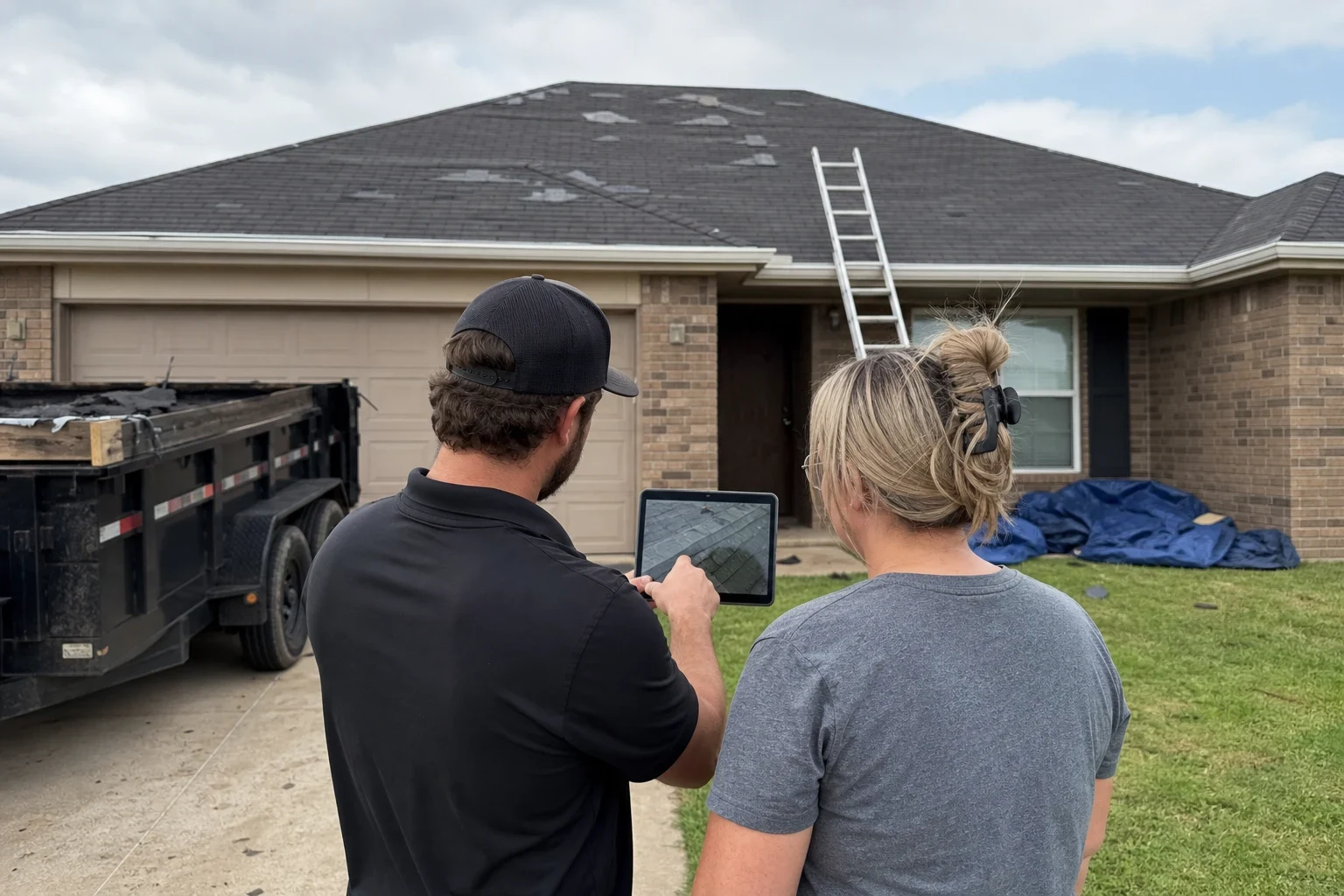
Signs Your Roof Needs a Repair
- Ceiling stains
- A tan ring overhead or a damp patch around a light fixture tells you water has been getting in for some time. Tracing it early saves drywall and insulation.
- Shingles in the yard
- Pieces of shingle on the lawn after a gusty spring front mean exposed spots on the roof. Those spots will let the next rain through.
- Granules in the gutters
- Sandy buildup at the downspouts shows shingles losing their protective surface, often from hail strikes or simple age.
- Lifted or curling edges
- Shingles that cup, curl or lift in a breeze have lost their seal to the row beneath, giving water a path underneath.
- Signs in the attic
- Stale, mildewy air, darkened patches on the underside of the roof boards or insulation that feels wet are worth a look long before any mark appears on a ceiling.
What Happens on a Repair Visit
- 1
Start with a call
Describe the symptoms and where you notice them, whether that is a stain, a drip or a gap on the roof. We ask a couple of questions and agree on a convenient time.
- 2
Inspection and photos
We look over the roof and, when it is reachable, the attic. We share photos of the problem and explain what we suggest in everyday language.
- 3
A written estimate
Before work begins, you receive a line-item estimate for labor and materials, so the scope is settled in writing.
- 4
The repair itself
Ground covers go down, the damaged material comes off, soft sheathing is replaced, and matched shingles, underlayment and flashing go on. Most repairs wrap up in one visit.
- 5
Cleanup and review
Scrap is bagged, the magnet passes over yard and driveway, and we show you photos of the completed repair.
What Shapes the Price of a Roof Repair
We price each repair from the conditions on your roof, not from a fixed list. Swapping one cracked vent boot is a short job, while a leak that has crept into the sheathing takes more time and material. Your written estimate breaks out every line, so the total you agree to is the total you see.
- How much area is damaged
- Replacing a few shingles on an open slope is quick work. Rebuilding a section around a chimney or a valley takes longer and uses more flashing and underlayment.
- Roof pitch and access
- A steep pitch, a two-story eave or branches crowding the roofline call for extra safety gear and a slower, more careful pace.
- What we find under the shingles
- When water has softened the plywood, that section must come out and be replaced before anything new is laid over it. How far the damage reaches often shows only after the old layer is lifted, and we photograph it and talk with you before adding anything.
- Materials and matching
- Architectural shingles, retired colors, metal flashing and specialty vents each carry their own material cost, and a close match sometimes means sourcing a less common product.
Roof Repair Questions
- Can you match my existing shingles?
- Often closely, though not always exactly. Sunlight fades shingles over the years and manufacturers discontinue colors. We bring samples up to the roof, hold them beside your current shingles and tell you plainly how the patch will read from the street before anything is installed.
- When does a patch make more sense than replacing the whole roof?
- A patch is usually the sensible call when the damage is confined to one area and the rest of the shingles still flex without cracking and hold onto their granules. If shingles snap on every slope, water is coming in at several spots or the decking feels soft across large sections, repairs turn into repeat visits that never quite catch up. We walk you through what we found, with photos, and the choice stays yours.
- Will the repair make a mess of my yard?
- We plan the job around keeping things neat. Tarps cover beds and shrubs, torn-off shingles go directly into bags or a container rather than onto the grass, and a magnet sweeps the lawn and driveway for stray nails before we pack the truck.
- Do I need to be home during the repair?
- Not for the whole visit. We need roof access and, for the inspection, ideally a look in the attic. Once you approve the plan, plenty of homeowners carry on with their day, and we go through the photos with you when the work is done.
- Could my roof damage be from a storm?
- It might be. Hail leaves round bruises and dislodged granules, and wind tends to crease or peel shingles along their seal line, which looks different from the slow wear of age. We will tell you which we see. If it points to a storm, our storm damage repair page covers how we document damage for an insurance claim.
Ready to Stop the Drip
Describe the stain, the sound or the missing shingle, and we will arrange a time to look. You will see what failed, how we plan to fix it and a yard left tidy when we go.