ServicesCommercial Roof Replacement
Commercial Roof Replacement in Blanchard, OK
When a flat or low-slope roof has more patches than membrane, we replace it in planned sections. Your building stays dried in every night, your doors stay open, and the lot and walkways are swept clean before our crew leaves each day.
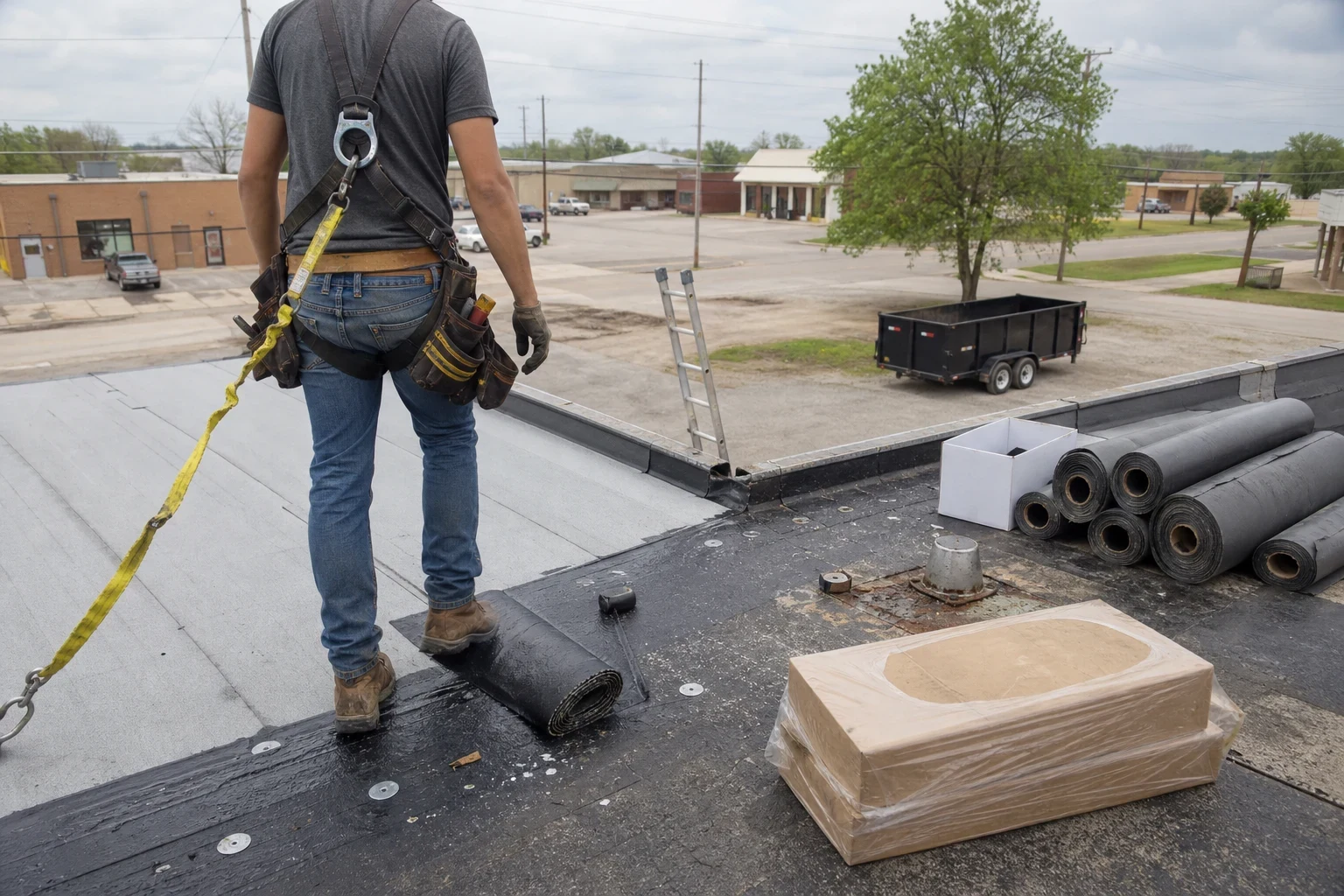
When replacement is the right call
Most commercial roofs give plenty of warning. Seams start lifting, ponding water sits for days after a rain, and leaks show up in a new spot each season. At some point the insulation under the membrane is holding water, and every repair just moves the problem a few feet over. That is when a full replacement costs less over time than chasing leaks.
We replace TPO, EPDM, modified bitumen and metal roofs on shops, offices, churches, warehouses and small retail buildings. Before we recommend anything, we look at what is underneath: the deck, the insulation and the drainage. When a targeted fix can buy the roof a few more good years, you will hear that from us plainly, and our commercial roof repair service may be the better fit for now.
A roof replacement on an occupied building touches tenants, customers and parking. We plan around all three, and we treat a clean site as part of the job rather than an afterthought.
What the work includes
Core cuts and a moisture check
We cut small test samples to see how many layers are on the roof and whether the insulation is wet. That answer decides between a full tear-off and a recover over sound material.
Tear-off and deck repair
Old membrane and soaked insulation come off down to the deck. Rusted steel or soft wood decking is replaced before anything new goes down, and we photograph what we find so you can see it.
Tapered insulation for drainage
Ponding is often a slope problem, not a membrane problem. Where water has been sitting, we can add tapered insulation to push it toward drains and scuppers.
New membrane and flashings
We install the new system and re-flash every curb, rooftop unit, pipe, parapet wall and drain. Flashing details are where most commercial leaks start, so they get the slowest, most careful hands on the crew.
Edge metal and drainage
New coping, drip edge and scupper boxes finish the perimeter. If your downspouts or gutters need attention, our gutters work can be folded into the same project.
Daily cleanup and a final sweep
Debris goes straight into a covered dumpster or chute, never over the edge onto walkways. We run magnetic sweepers across the lot and entrances at the end of each day and again at the finish.
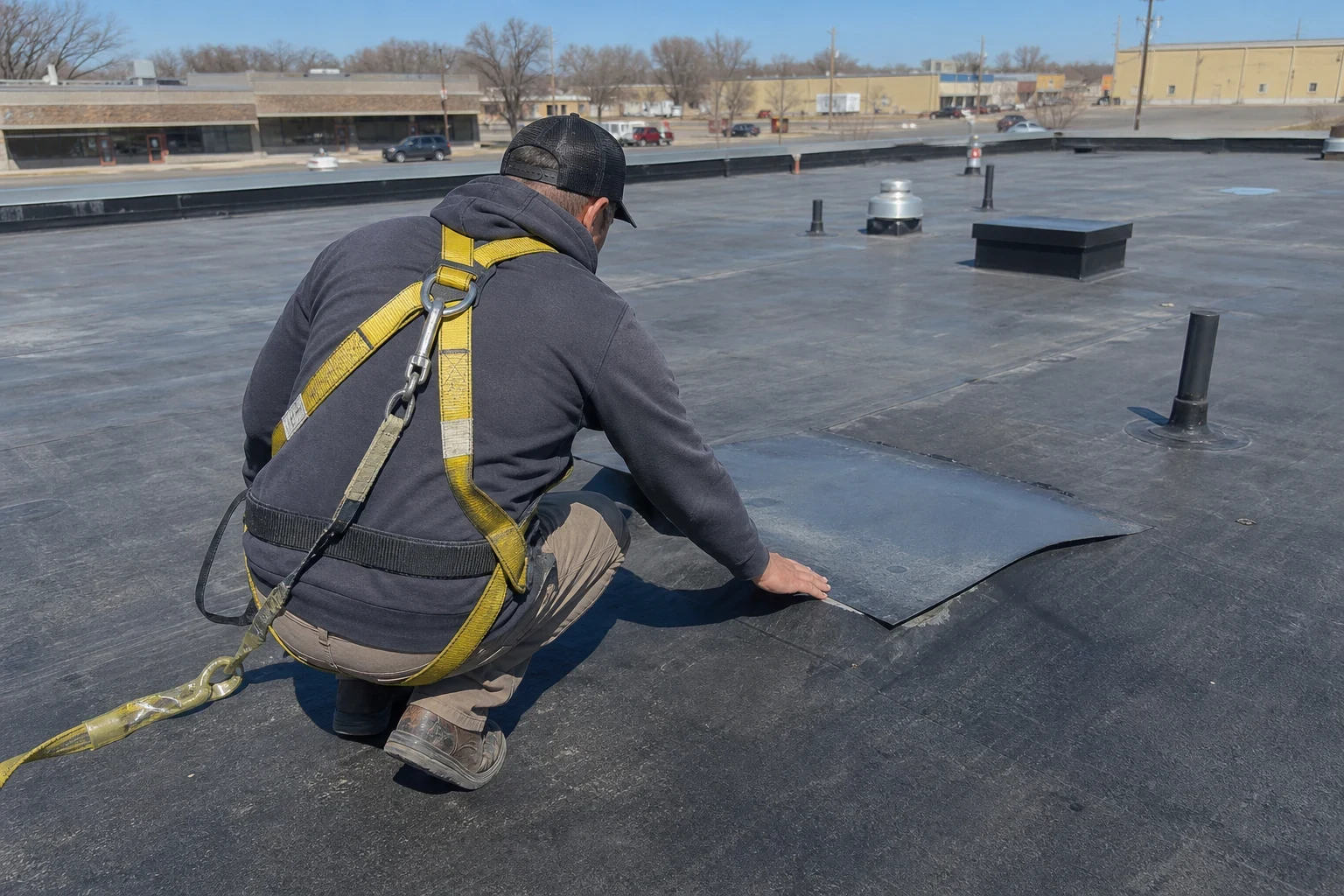
Signs your commercial roof is due
- Water that stays for days
- Ponds that remain 48 hours after rain stress seams and add weight. On an older roof it usually means the insulation has compressed or the slope was never right.
- Leaks in new places
- If each repair is followed by a drip somewhere else, water is likely traveling through wet insulation under the membrane.
- Shrinking or split membrane
- Aging EPDM pulls away from walls and curbs. TPO and modified bitumen crack and blister as they lose flexibility after years of summer heat and winter freezes.
- Soft spots underfoot
- A roof that gives when you walk on it often has saturated insulation or a weakened deck below.
- Rising energy bills
- Wet insulation stops insulating. A cooling bill that keeps climbing can point back to the roof.
How a replacement runs
- 1
Walk the roof and talk it through
We inspect the roof, take core samples and ask how the building is used: delivery times, busy hours, sensitive equipment, where customers park. You get a written, line-item estimate by phone and in hand.
- 2
Permit and schedule
We pull the permit and plan the staging area, dumpster spot and material delivery. If rooftop units need to be lifted or disconnected, we coordinate timing with your HVAC contractor.
- 3
Work in dried-in sections
We only open as much roof as we can close the same day. Entrances below the work area are roped off or covered, and interior areas with valuable stock or equipment can be protected with plastic before we start overhead.
- 4
Clean as we go
Each evening the roof is sealed, loose material is bagged, and the lot is swept with magnets. Your staff should arrive the next morning to a building that looks open for business.
- 5
Final walk and inspection
We walk the finished roof with you, test the drains and hand over photos of the deck and flashing work. The city inspection is scheduled once the work is complete.
What moves the price
Every commercial roof is priced from its own measurements and what the core cuts reveal. Two buildings with the same square footage can land far apart once the deck and insulation are opened up. The written estimate breaks the job into line items, so tear-off, deck work, insulation and flashing each appear on their own line.
- Tear-off or recover
- Recovering over a dry, single-layer roof avoids most removal and disposal. Wet insulation or multiple existing layers mean a full tear-off.
- Membrane and insulation choice
- TPO, EPDM, modified bitumen and metal differ in material cost and labor. Thicker membranes and added insulation for energy savings raise the number up front.
- Deck condition
- Replacing rusted or rotted decking is priced per section once it is exposed. We show you photos before that work goes ahead.
- Penetrations and rooftop equipment
- Every unit, curb, skylight and pipe needs its own flashing. A roof crowded with equipment takes more hours than an open one.
- Access and scheduling
- Tight lots, crane lifts and after-hours work to keep a business running all add time and planning.
Commercial roof replacement questions
- Can we stay open while the roof is replaced?
- In most cases, yes. We work in sections, keep entrances protected and plan noisy tear-off around your busiest hours when we can. Before we start, we agree on staging and parking so customers can still get to the door.
- Do we need a full tear-off?
- Not always. If the core cuts show one existing layer and dry insulation, a recover can be a sound, lower-cost option. If the insulation is wet or there are already two roofs on the building, a tear-off is the honest answer.
- Which membrane is best for our building?
- It depends on the building's use, rooftop traffic and budget. TPO reflects heat well and suits many shops and offices, EPDM handles movement and cold, and modified bitumen stands up to foot traffic. We will explain the tradeoffs plainly and let you choose.
- How long does a commercial replacement take?
- Small buildings can be finished in a few working days, while larger roofs take longer. Weather in Blanchard and the surrounding area can pause work, and we never open more roof than we can close before it rains.
- What happens to the old roofing and the nails?
- Old material goes into a covered dumpster or down a chute, not tossed off the edge. We sweep the lot, sidewalks and entrances with magnetic rollers every day and again during the final walk.
Plan your new roof with us
Tell us about the building, the leaks and how you use the space. We will set a time to walk the roof, take cores and talk through a clean, well-staged replacement.